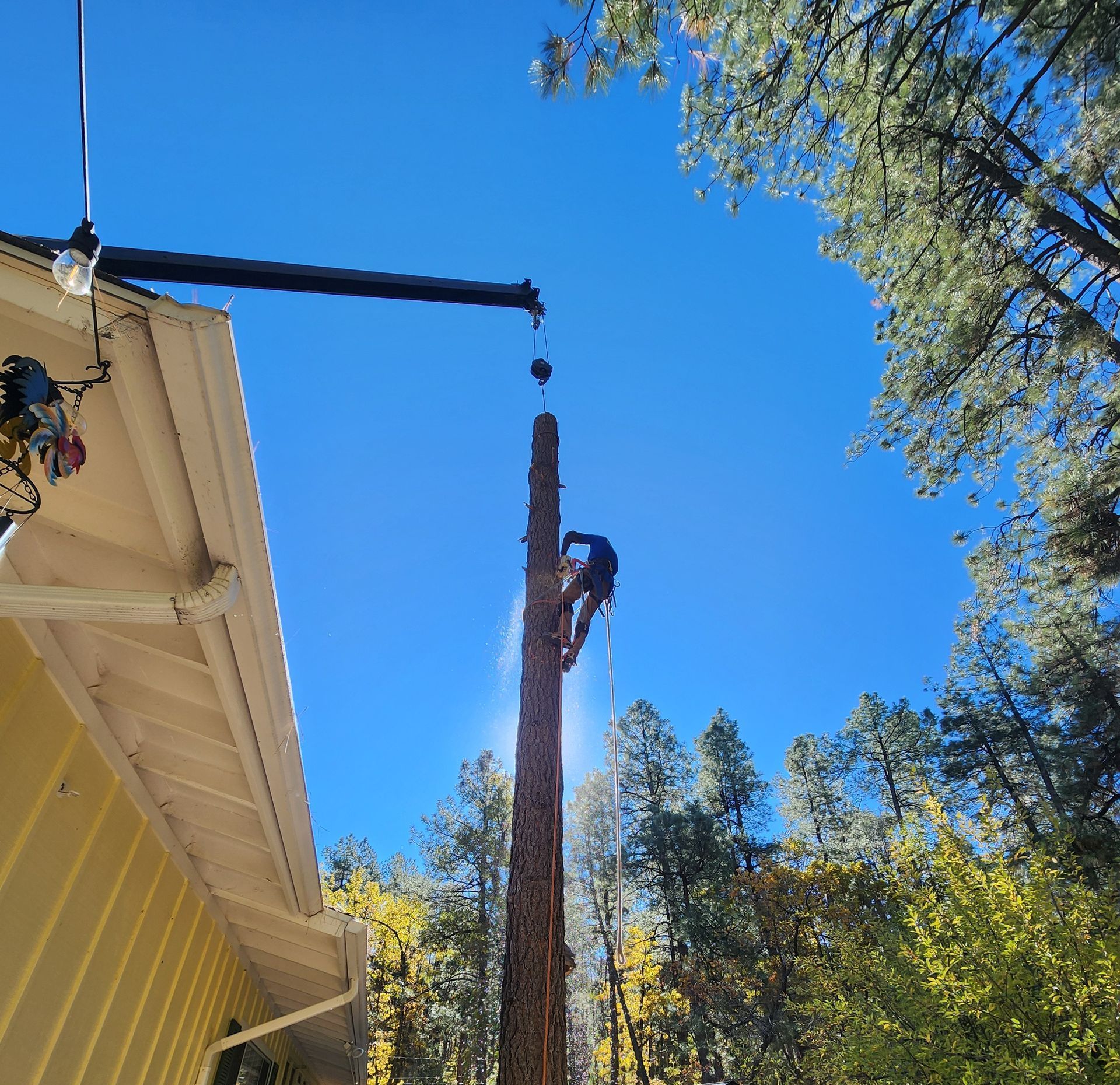
Pre-Monsoon Pruning Tips for Prescott Homeowners
7. The Tree Was Damaged in a Storm
Prescott's monsoons don't give much warning — but your trees can be ready before the first storm rolls in. Every year from July through September, Prescott homeowners watch powerful microbursts, high-velocity winds, and heavy rainfall arrive with little notice. The trees that fail — snapping limbs, uprooting, dropping onto roofs — are almost always the ones that weren't prepared. The window between spring and monsoon onset is the most important and most overlooked opportunity in Prescott tree care. Clear Creek Tree Service helps Prescott homeowners use that window wisely. Here's exactly what to do, what to avoid, and why timing makes all the difference.
What Prescott's Monsoon Season Does to Trees
Prescott's monsoon season runs from mid-June through mid-September — and it stresses trees in ways that compound quickly. Here's what's working against your trees when the storms arrive:
| Monsoon Threat | What It Does to Your Trees |
|---|---|
| Saturated Soil | Intense rain turns Prescott soil into a slurry, eliminating root anchorage and dramatically increasing whole-tree toppling risk |
| Sail Effect | Thick, unpruned canopies catch high wind gusts like a parachute — transferring massive force directly to branches and the root system |
| Microbursts | Short, powerful downdrafts and straight-line winds arrive without warning and rip through trees that appear otherwise healthy |
| Pre-Monsoon Drought Stress | Prescott's dry spring months leave trees brittle and compromised before the storms even arrive — weakening their ability to flex and absorb wind load |
| Deadwood & Excess Foliage | Untouched trees with dead branches or overgrown canopies are the first to shed limbs — often onto structures below |
Why Prune Before Monsoon — Not After
Proactive pruning before monsoon season is the single highest-impact step a Prescott homeowner can take to protect their property. Here's why the timing matters so much:
1. Reduces Wind Resistance — The Sail Effect A dense, overgrown canopy acts like a sail in high-velocity wind. Thinning the canopy before monsoon season allows wind to pass through branches rather than building pressure against them. This one step alone dramatically reduces the risk of limb failure and uprooting during a microburst.
2. Removes Hazards Before They Become Projectiles Dead, diseased, and brittle branches are ticking time bombs during a monsoon. Scheduled pre-monsoon pruning removes this deadwood and reduces the weight of heavy limbs before the storm makes them a threat to your roof, vehicle, or neighboring property.
3. Pruning Wounds Heal Faster in Warm Weather Late spring and early summer — May through June — allow pruning wounds on native desert trees like Palo Verde, Mesquite, and Acacia to heal rapidly before the heavy rains arrive. Waiting until after monsoon season means wounds heal more slowly and are exposed to moisture intrusion during the storm period.
4. Structural Issues Are Easier to Spot in Calm Conditions Before monsoon, you can clearly see co-dominant stems, narrow V-shaped crotch angles, and weak branch unions that are likely to fail under pressure. Once foliage is dense and conditions are wet, these structural hazards become much harder to identify.
5. Post-Storm Cleanup Is Far More Dangerous and Expensive Fallen, storm-stressed branches are unpredictable. Tensioned wood snaps back violently. Emergency storm cleanup costs significantly more than scheduled maintenance — and carries real safety risk for anyone attempting DIY removal.
Pre-Monsoon Pruning Priorities for Prescott Homeowners
When Clear Creek Tree Service performs a pre-monsoon assessment, here's what we focus on first:
| Priority | Task | Why It Matters |
|---|---|---|
| 1 | Remove all dead, dying, or hanging branches | These are the highest-risk projectiles in monsoon winds |
| 2 | Thin dense canopies | Reduces sail effect — allows wind to pass through rather than build pressure |
| 3 | Raise lower limbs | Create clearance over rooflines, walkways, and vehicles |
| 4 | Address overhang over structures and power lines | Eliminates direct strike risk during storm events |
| 5 | Inspect for disease and pest damage | Weakened limb structure fails first under wind stress |
Two techniques to avoid:
- Topping — never cut main leader stems. This weakens structure, invites disease, and produces fast-growing, weak regrowth that is more dangerous than the original canopy
- Lion Tailing — stripping all inner branches and leaving foliage only at branch tips shifts weight to the ends, making limbs far more likely to snap in high winds
Prescott's Common Trees and Their Pre-Monsoon Pruning Needs
Each species common to Prescott has specific pruning requirements — and getting it wrong can be as damaging as skipping it entirely:
| Tree | Pruning Need | Best Timing |
|---|---|---|
| Ponderosa Pine | Limb up lower branches to reduce ladder fuels (fire safety) and remove dead, broken, or diseased branches | Late winter to early spring during dormancy |
| Arizona Cypress | Shape and thin to reduce wind load. Avoid heavy pruning on old wood — it does not regenerate, leaving permanent bare spots | Light pruning in March before new growth |
| Alligator Juniper | Assess for deadwood, structural cracks, and weak crotches. Generally requires minimal pruning unless removing damaged branches | Best pruned in winter |
| Emory Oak | Remove deadwood, thin for structural integrity, and check for mistletoe — remove infected branches to prevent spread | During dormant season |
General pruning principles for Prescott trees:
- The Four D's — always start by removing branches that are Downward, Diseased, Damaged, or Dead
- Winter pruning window — late November through early March minimizes stress and disease spread for most species
- Bark beetle caution — remove pines, cypresses, and junipers killed by bark beetles in winter before beetles become active again in spring
- Frost damage rule — avoid heavy pruning on frost-damaged growth, as late frost can cause further damage to exposed tissue
What NOT to Do Before Monsoon
Preparation mistakes are as damaging as inaction. Here's what to avoid:
| Mistake | Why It's Harmful |
|---|---|
| Topping trees | Removes the main leader, weakens structure, invites disease, and produces dangerous fast-growing regrowth |
| Lion tailing | Concentrates foliage weight at branch tips — dramatically increases snap risk in high winds |
| Over-pruning in extreme heat | Stresses desert-adapted plants and exposes interior growth to sunburn damage |
| Ignoring a leaning tree | A tree with a new lean, soil heaving, or exposed roots on the opposite side is at immediate failure risk — do not wait |
| Overwatering before monsoon | Excess soil moisture weakens root anchorage — saturated soil cannot hold trees against wind |
| Leaving palm seed pods and dead fronds | These act as sails during high winds and become dangerous projectiles when they detach |
Hiring a Certified Arborist vs. DIY — Why It Matters in Prescott
Prescott's steep terrain, specialized native species, and high-wind conditions make tree work here more technically demanding than most regions. Here's what separates a certified professional from a DIY attempt or an uncertified crew:
What ISA Certification Means:
- ISA Certified Arborists have passed rigorous exams covering tree biology, structural assessment, and risk evaluation
- They maintain continuing education requirements and stay current on ANSI A300 industry standards
- They adhere to a professional code of ethics that prioritizes long-term tree health over quick removal
What a Professional Assessment Catches That Homeowners Miss:
| Hidden Issue | Why It Matters |
|---|---|
| Internal decay | Specialized tools detect rotten cores and structural weak points invisible from the outside |
| Pest and disease identification | Early detection of local issues like mistletoe or bark beetles before they compromise the whole tree |
| Proper pruning limits | Understanding how much canopy removal a specific tree can tolerate without going into shock |
| Root and soil health | Evaluating root condition — often the underlying cause of visible top-down decline |
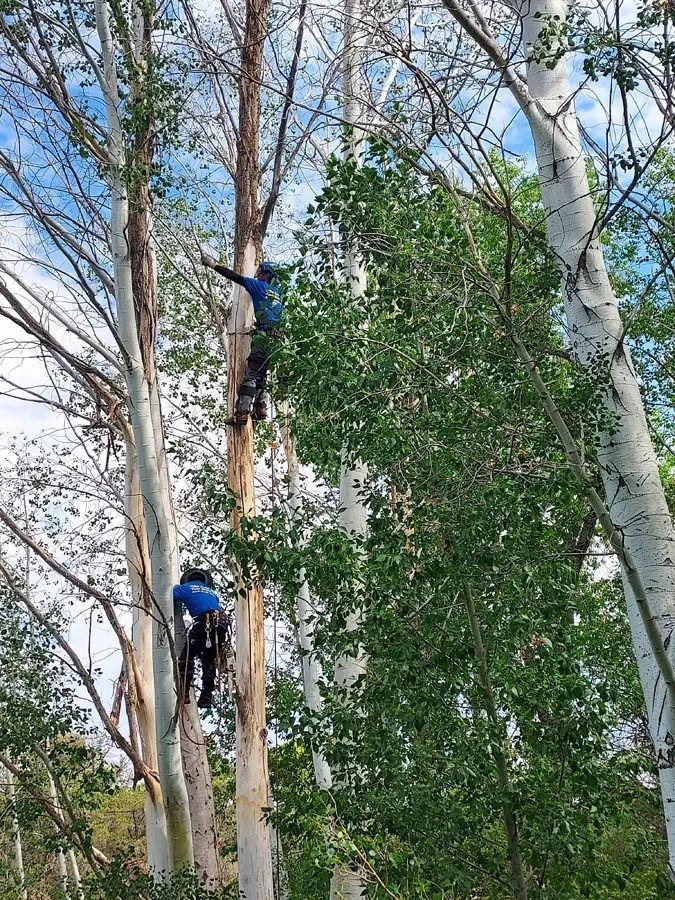
Liability and safety considerations: Large tree work involves heavy equipment, falling debris, and tensioned wood under stress. Professional tree companies carry both liability insurance and worker's compensation. If an uninsured person is injured on your property during tree work, you are likely liable. Clear Creek Tree Service is fully insured — protecting both your property and your peace of mind.
The Best Time to Act Is Before the First Storm Warning
Once monsoon season arrives in Prescott, the preparation window closes. By the time microbursts are showing up on the radar, it's too late to address the weak branch unions, overgrown canopies, and deadwood that cause the most damage. Pre-monsoon pruning is one of the most cost-effective investments a Prescott homeowner can make — and one of the most time-sensitive.
Schedule your pre-monsoon tree pruning with Clear Creek Tree Service in Prescott today — before severe weather season arrives.
Schedule Your Pre-Monsoon Tree Assessment →
Why Spring Is the Right Time for Soil-Based Tree Care
Early spring offers the best opportunity to:
• Assess root health
• Prune for structural support
• Apply soil amendments
• Prepare for seasonal winds
Healthy soil supports long-term tree stability.

Contact Us
We will get back to you as soon as possible.
Please try again later.
More Posts Like This:
Looking for Trusted Tree Removal Experts in Prescott, AZ?
At Clear Creek Tree Service, we’re committed to helping you maintain a safe, attractive, and hazard-free property. Whether you’re dealing with a dangerous tree, need stump grinding, or require professional land clearing, our experienced crew is here to assist.
Don’t let a risky tree lead to expensive damage. Reach out today for a free consultation and estimate on tree removal services in Prescott, AZ.